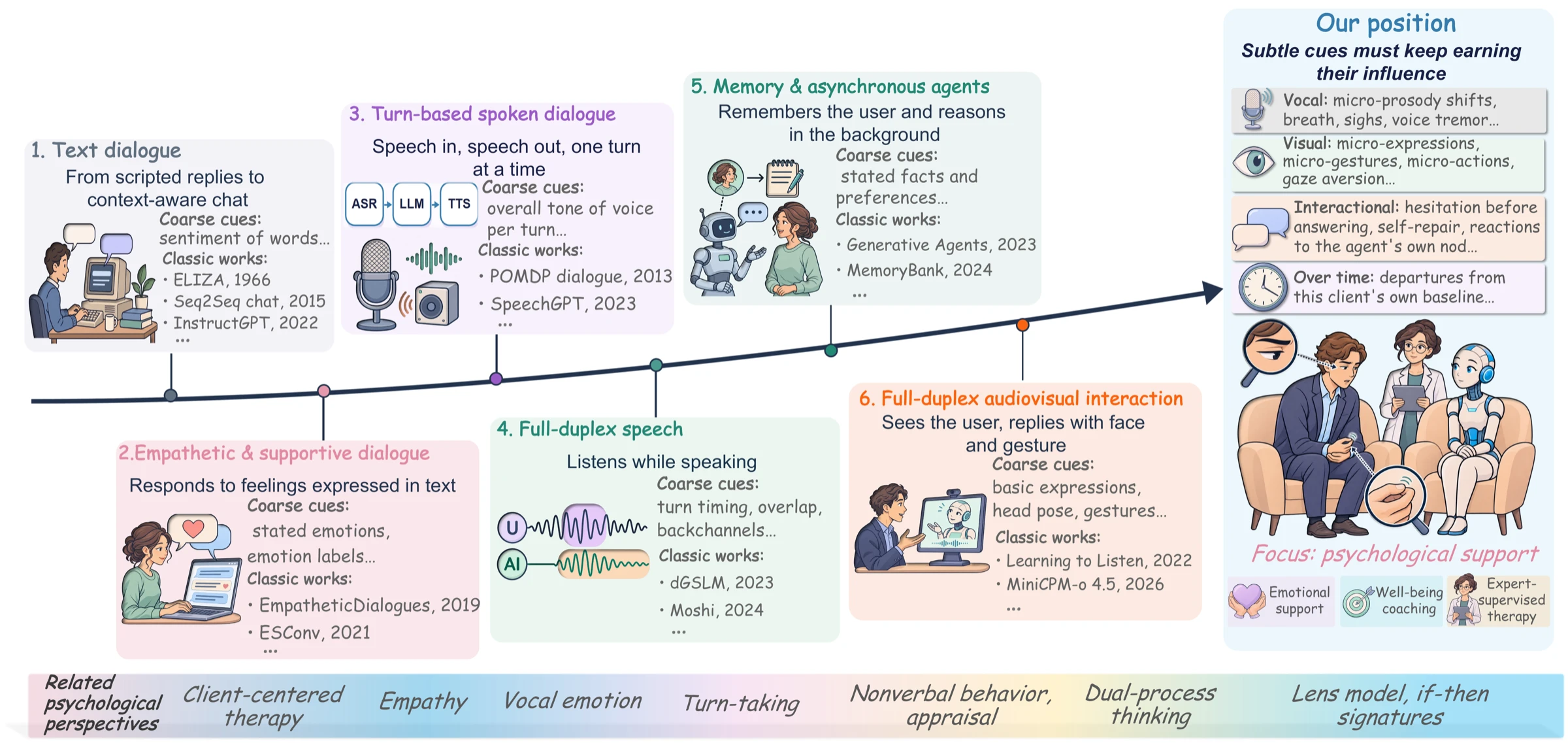
He that has eyes to see and ears to hear may convince himself that no mortal can keep a secret. If his lips are silent, he chatters with his finger-tips; betrayal oozes out of him at every pore.
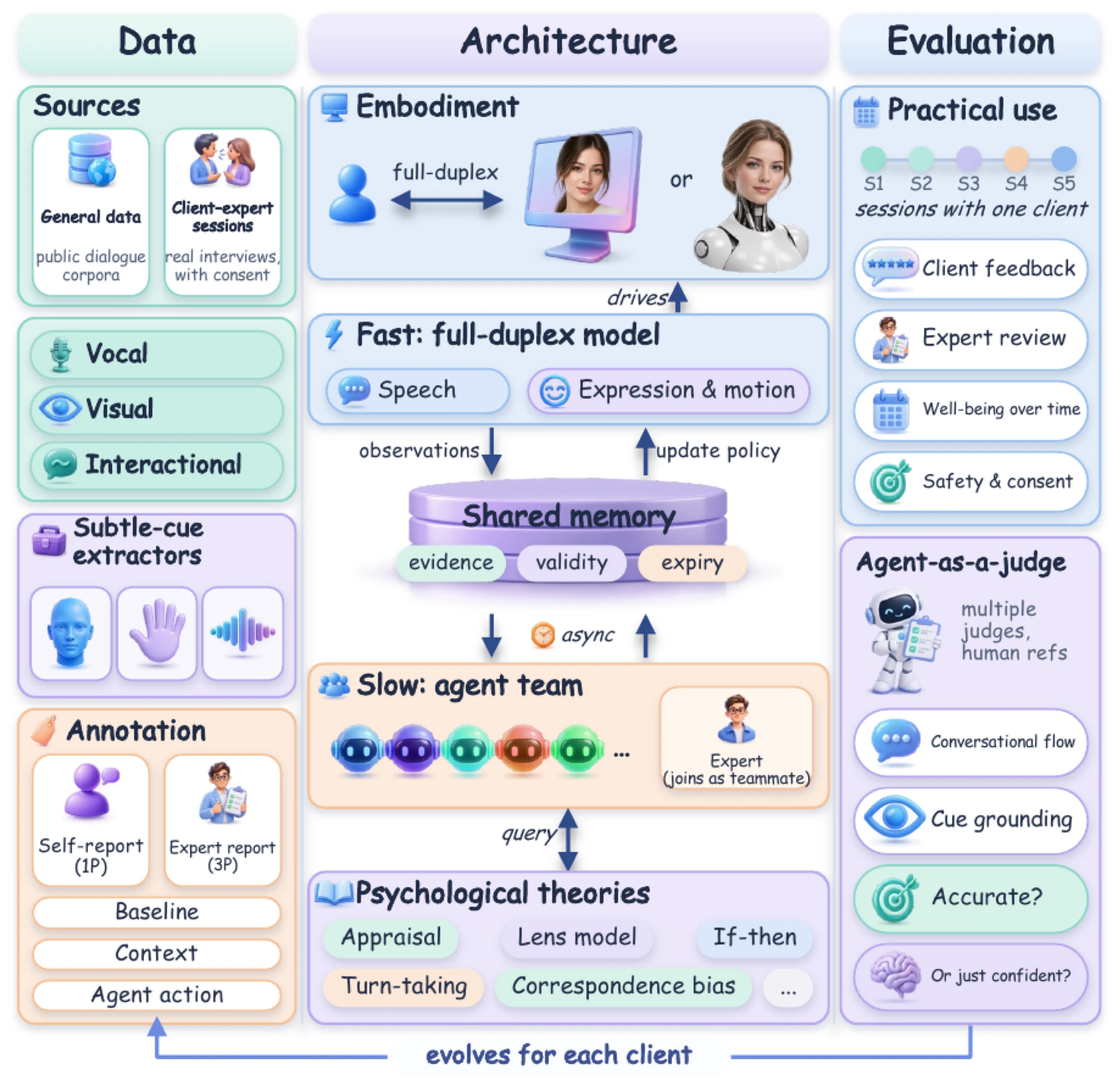
— Sigmund Freud, Fragment of an Analysis of a Case of Hysteria (1905)Freud's observer needed only eyes and ears. Full-duplex agents now have both, and they use them while the other person is still talking. A client may slow down, glance away, or rub their fingers as a sensitive topic approaches. Could an agent notice, and should it believe what it notices?
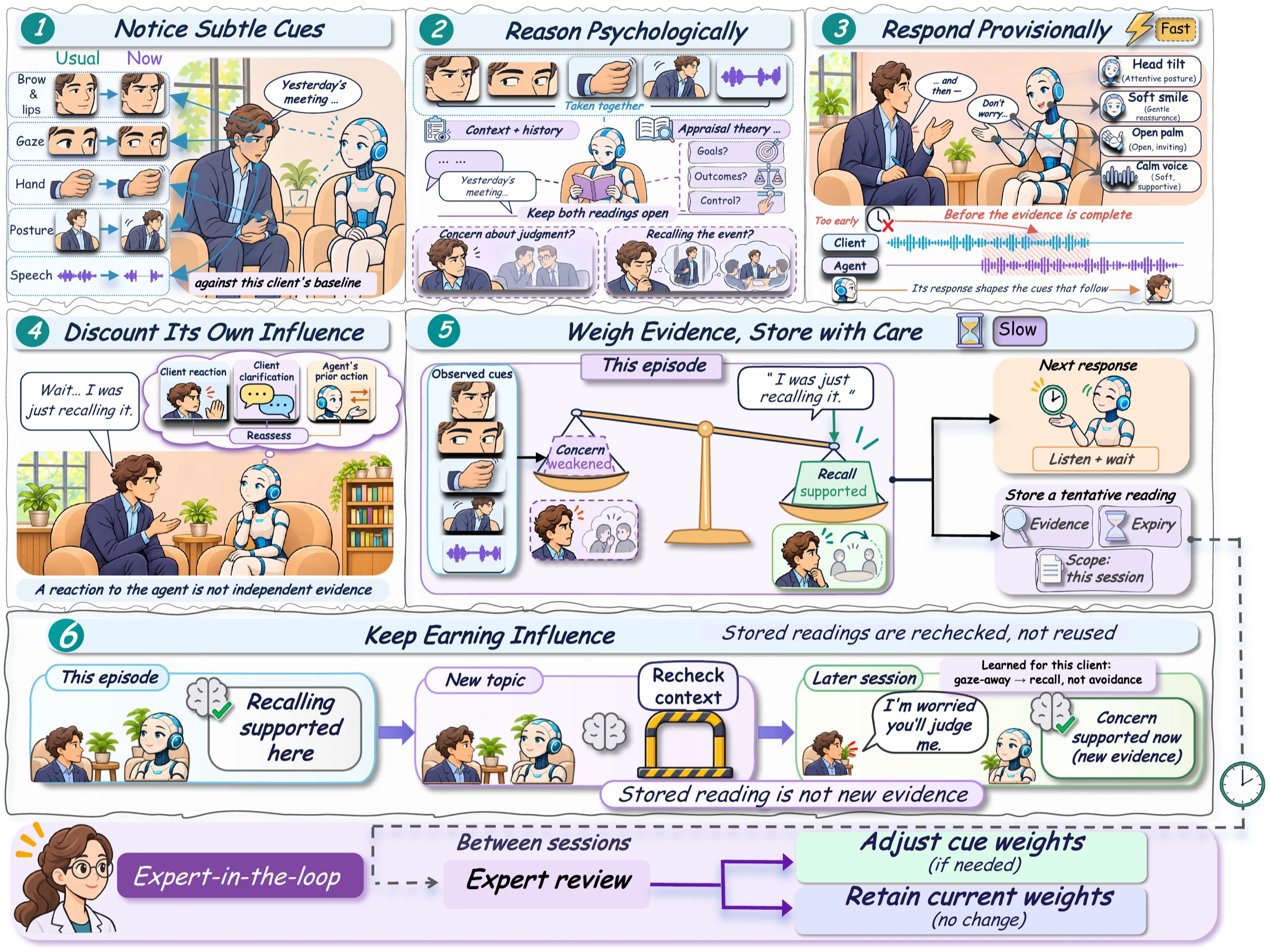
Better perception alone will not close the gap
Subtle cues are ambiguous
A perfectly detected finger rub may reflect anxiety, concentration, or simply cold hands.
Why?
Facial configurations and micro-gestures do not map reliably onto particular emotions in isolation (Barrett et al., 2019; Liu et al., 2021).The agent changes what it observes
A full-duplex agent nods and reacts while you speak, and your next move partly answers its own behavior.
Why?
Listeners' responses shape how speakers tell a story (Bavelas et al., 2000), even when the listener is a robot (Park et al., 2017). Reading that as evidence about you alone is a mistake.Memory turns passing readings into traits
One tense afternoon can quietly become "this client is anxious" in a stored profile.
Why?
Memory-augmented agents over-apply stored memories (Hu et al., 2026) and miss changes in a user (Jiang et al., 2025), much as people infer lasting traits from situational behavior (Gilbert & Malone, 1995).Watching more closely does not make a weak cue strong. People judging lies from truths are right only 54% of the time (Bond & DePaulo, 2006), and a lens-model meta-analysis traces this limit to the weakness of the cues, not to the observers (Hartwig & Bond, 2011). The more an agent sees, the more confidently it may read secrets that are not there.